Darkside of Medicine
Genetics, Epigenetics and Teratogens
Introduction
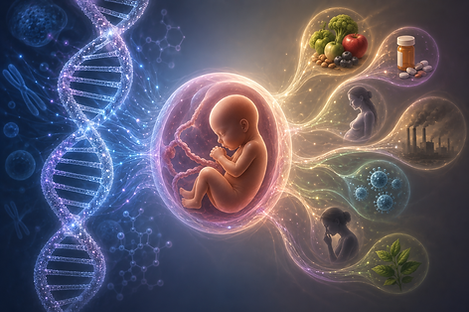
Every baby develops according to a unique genetic blueprint inherited from their parents. However, genes are only part of the story. The environment in which a baby develops can also influence how those genes function. This interaction between genes and the environment helps explain why not all babies exposed to the same teratogen are affected in the same way.
Understanding genetics and epigenetics can provide important insights into fetal development, individual susceptibility, and the complex ways in which teratogens may influence health.
What Are Genes?
Genes are sections of DNA that contain instructions for building and maintaining the body. They help determine how cells grow, develop, communicate, and function.
Genes influence many characteristics, including:
-
Growth and development
-
Organ formation
-
Brain development
-
Metabolism
-
Immune function
-
Physical characteristics
Every person inherits a unique combination of genes from
their biological parents.
What Is DNA?
DNA (deoxyribonucleic acid) is the molecule that carries genetic information within our cells. It acts like an instruction manual, providing the information the body needs to grow, develop, and function.
Nearly every cell in the body contains the same DNA, but different cells use different parts of the genetic instructions depending on their role.
What Is Genetics?
Genetics is the study of genes, inheritance, and how characteristics are passed from one generation to the next.
Some health conditions are primarily genetic, meaning they result from changes or variations within genes themselves. Genetics helps explain why some conditions run in families and why individuals can respond differently to the same environmental influences.
What Is Epigenetics?
Epigenetics refers to changes in how genes are switched on or off without changing the underlying DNA sequence.
A useful way to think about it is:
DNA is the instruction book.
Epigenetics helps decide which instructions are read and when.
Epigenetic changes do not alter the genetic code itself. Instead, they influence how the body uses that code.
How Can the Environment Influence Gene Expression?
Many factors can influence gene expression during development, including:
-
Nutrition
-
Stress
-
Illness
-
Environmental exposures
-
Some medicines
-
Hormones
-
Chemical exposures
Researchers are studying how these factors may alter gene activity during critical periods of development.
Genetics, Epigenetics and Teratogens
Teratogens do not affect everyone in exactly the same way.
One reason may be that individuals have different genetic susceptibilities. Some people may be more vulnerable to a particular exposure, while others may be more resilient.
Researchers are also investigating whether some teratogens may influence epigenetic processes during development. These changes could potentially affect how genes function throughout life.
This remains an active area of scientific research, and many questions are still being explored.
Why Are Not All Babies Affected in the Same Way?
Several factors may influence how a baby responds to an exposure:
-
Genetics
-
Epigenetics
-
Timing of exposure
-
Dose of exposure
-
Maternal health
-
Nutrition
-
Other environmental influences
These factors interact in complex ways and help explain why outcomes can vary considerably between individuals.
Gene–Environment Interactions
Development is influenced by both genetic and environmental factors.
Rather than acting independently, genes and the environment often interact. Scientists refer to this as a gene–environment interaction.
This means that the same exposure may have different effects depending on an individual's genetic makeup, while the same genetic susceptibility may lead to different outcomes depending on environmental influences.
Looking to the Future
#
Research into genetics, epigenetics, and teratogens is rapidly evolving. Scientists continue to investigate how genes, environmental exposures, medicines, nutrition, and other factors work together to influence fetal development and lifelong health.
Understanding these interactions may help improve prevention, risk assessment, and support for future generations.